
Becoming like God
Plato provocatively exhorts us to leave this world, and human nature, behind.

Plato, in the Theaetetus, says that we should become like God as much as possible. In saying so, he challenges us to leave behind both this world and our human nature. The process of becoming like God, for Plato, consists in contemplating a world of eternal truths.
Later philosophers also embrace the idea of becoming like God, but for them, both ‘God’ and the process of ‘becoming like God’ are different. For instance, Epicurus imagines the gods as trouble-free beings, and so becoming like God for Epicurus means making ourselves into people who have as few disturbances as possible. Meanwhile, for the Stoics, becoming like God involves accepting the providential order that governs the entire world. You see everything that happens as both necessary and good.
For Plato, it’s quite different.
We should begin by considering the specific passage at hand from the Theaetetus:
But it is not possible, Theodorus, that evil should be destroyed, for there must always be something opposed to the good; nor is it possible that it should have its seat in heaven. But it must inevitably haunt human life, and prowl about this earth. That is why a man should make all haste to escape from earth to heaven; and escape means assimilation to God as much as possible; and the assimilation is to become just and pious, with wisdom (176a-b).
Before we speak about the idea of justice and piety with wisdom that is mentioned at the end, we should talk about the beginning of the passage.
Plato thinks that evil will never be destroyed. The world that we live in is fundamentally disordered: we might be able to mitigate the amount of evil here, but we could never eliminate evil entirely. Here on Earth, good always has its opposite: evil. That’s part of human life.
So, naturally, then, we should strive to put aside the human. To do so is to flee from this inescapably evil world.
It’s a difficult thought to understand because we often think that the goal of a human life is something distinctly human. Just as the life fit for a dog is one of playing fetch and going on walks, and the life fit for a pig is rolling around in mud, what makes you and I happy will naturally involve some consideration of human nature, you might think.
But for Plato, human nature is something to be overcome. It isn’t something to be completed or perfected. Human nature has to be overcome because evil always accompanies it.
The solution: flee with haste from this world and from human nature towards the divine.
Here is a description of how this sort of person, the philosopher, is going to look in practice:
His clumsiness is awful and gets him a reputation for fatuousness. On occasions when personal scandal is the topic of conversation, he never has anything at all of his own to contribute; he knows nothing to the detriment of anyone, never having paid any attention to this subject—a lack of resource which makes him look very comic. And again, when compliments are in order, and self-laudation, his evident amusement—which is by no means a pose but perfectly genuine—is regarded as idiotic. When he hears the praises of a despot or a king being sung, it sounds to his ears as if some stock-breeder were being congratulated—some keeper of pigs or sheep, or cows that are giving him plenty of milk; only he thinks that the rulers have a more difficult and treacherous animal to rear and milk, and that such a man, having no spare time, is bound to become quite as coarse and uncultivated as the stock-farmer (Theaetetus 174d-e).
The idea is that the philosopher is going to look like a fool. Self-important people will discuss topics that strike them as being supremely important: personal scandals, the qualities of some ruler, etc. And, in fact, the passage goes on and gives more examples: self-important people will busy themselves with the family histories of so-and-so.
Here’s the point: the philosopher is going to be much more interested in Justice Itself than in particular instances of this (allegedly) just or unjust thing. The philosopher is going to ask ‘what is justice?’ and ‘what is a human being?’.
The philosopher will not be thought of well by anyone, but that’s because other people fundamentally pay attention to the wrong thing.
There’s a world of eternal truths, home to the answers of questions like ‘what is justice?’, ‘what is piety?’, ‘what is good?’, and so on, that is, in the most profound and crucial sense, separate from the world with which self-important people busy themselves.
This isn’t a mere pose that the philosopher strikes insincerely. Consider this passage:
For he does not hold himself aloof from them in order to get a reputation, but because it is in reality only his body that lives and sleeps in the city. His mind, having come to the conclusion that all these things are of little or no account, spurns them and pursues its winged way, as Pindar says, throughout the universe, ‘in the deeps beneath the earth’ and geometrizing its surfaces, ‘in the heights above the heaven’, astronomizing, and tracking down by every path the entire nature of each whole among the things that are, never condescending to what lies near at hand (Theaetetus 173e-174a).
The philosopher’s body lives here on Earth, but the mind is elsewhere, and that mind is what we truly are.
That’s what it means to escape this world and become like God: to leave one’s body behind, not literally (although that will happen one day), but to embrace one’s identity as a mind that dwells in a world of eternal truths.
So, the phrase ‘justice and piety with wisdom’ has to be interpreted in this light. Any schmuck can go through the motions and behave justly and piously. (As Plato says enigmatically in the Phaedo, there are many who carry the thyrsus, but the Bacchants are few. This means that there are many who go through the motions and outwardly appear as devotees, but few actually are.) But it is only when we gain wisdom that these virtues find their true fulfillment. Now we no longer go through the motions but we are truly virtuous.
Wisdom is achieved by recognizing what the ignorant do not: namely, that we are minds that should not busy ourselves with a world that is perpetually and chronically haunted by evils.
Here is the passage in which all of this comes together:
My friend, there are two patterns set up in reality. One is divine and supremely happy; the other has nothing of God in it, and is the pattern of the deepest unhappiness. This truth the evildoer does not see; blinded by folly and utter lack of understanding, he fails to perceive that the effect of his unjust practices is to make him grow more and more like the one, and less and less like the other. For this he pays the penalty of living the life that corresponds to the pattern he is coming to resemble. And if we tell him that, unless he is delivered from this ‘ability’ of his, when he dies the place that is pure of all evil will not receive him; that he will forever go on living in this world a life after his own likeness—a bad man tied to bad company: he will but think, ‘This is the way fools talk to a clever rascal like me’ (Theaetetus 176e-177a).
In this passage, Plato is saying that there are basically two ways of life. One way is characterized by ignorance, and he cannot even see that he is paying the penalty for his own ignorance. The other way of life, meanwhile, has happiness in store for the one who follows it. Unfortunately, to the foolish and ignorant, the path of happiness seems foolish and ignorant, but the exact opposite is true.
The point of all of this is what I said earlier: leave this world and human nature behind; become like God as much as possible. To do so, we need wisdom, and wisdom will come when we see that we are our minds and thus we don’t truly live here on Earth, although our bodies do.
Douglas R. Campbell is an Assistant Professor in the Department of Philosophy at Alma College. He is the author of An Introduction to the Ethics of Social Media. He is also the host of The Ancient Philosophy Podcast.
I appreciate all donations and shows of support. I will never put any material behind a paywall, but if you’d like to make a small donation, you can pay for a subscription to my Substack, or you can make a one-time donation by clicking this link.
Maybe I’m misunderstanding your interpretation, but I was wondering whether Plato’s language could be understood more metaphorical. When he writes “escape from earth to heaven,” could it be a metaphor for escaping evil morally, like by becoming just, pious, and wise, instead of implying that we must leave behind both this world and our human nature?
And when Plato writes that the philosopher’s mind is elsewhere, could he simply be contrasting an interest in universal questions with being absorbed in gossip, status, etc rather than suggesting that human nature itself should be abandoned?
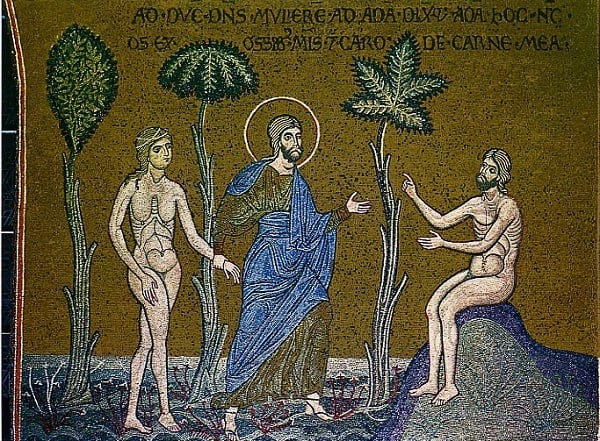
Let contrast what your first paragraph with what Jesus said: "I am the way, the truth and the life." It is not truth alone. The Bible/Genesis said we were created at the image of God. The way of the philosopher is a struggle to get at the truth while the struggle for the christians is to follow Jesus's example , mainly sacrifice our life for others and this lead both to life and truth. Who want to save his life will loose it. And the tale of the original sin in Genesis is a clear warning of the danger of attempting to cross the gap of taking oneself as God or revolting against our own creator. Exactly the goal of many philosophies and certain traditions.